
Pioneering MD introduces next generation nanotechnology…
Gene Therapy in a Bottle?
- Based on a Nobel Prize-winning technology
- Supports healthy DNA replication
-
Helps maintain youthful energy and stamina
-
Supports younger-acting cells and a longer health span
-
Promotes healthy aging and telomeres

Few people know this, but clinical research published by Proceedings of the National Academy of Sciences suggests your body may be aging 3X FASTER than previous generations.[2]
But now, a new discovery has got doctors and scientists buzzing with excitement…
A targeted delivery system capable of hitting the world’s smallest bullseye on the tip of your DNA.
A solution so precise, that when it’s aimed at the “aging clock” inside the nucleus of your cells…
…it can help maintain the strength, vitality, and youthful appearance you enjoyed in your 30s.

The New York Times calls it…
“Dazzling.”

Vanity Fair says it….
“Will open up new worlds of exploration.”
Scientific American believes
it puts you…
“On the path to designing your own superpowers!”
It’s no wonder this discovery is being heralded as “gene therapy in a bottle.”
There are no hospital visits, you don’t have to sign up for any studies, and…
You can do it from the comfort of your own home.
It’s the most complete and convenient solution to date.
But what’s most astonishing is this new technology comes directly from Mother Nature…
It’s the same technology used to create materials 200x stronger than steel…
The same technology that drives Japan’s “Bullet Train” to world record speeds of 224 mph…
And now you can use it to support the “machinery” inside your body’s aging clock and every one of your body’s natural functions:[3,4]
- Strength
- Mental sharpness
- Memory
-
Reflexes
-
Appearance
- Blood pressure
- Heart health
- Vision
-
Immune system
-
Mood
The High-Tech Solution to Creating a Younger Version of Yourself
This next generation technology operates on a scale we can barely conceive…
In the realm of nanometers… that’s billionths of a meter.
It’s the same scale on which all living cells — and the things that nourish or kill them — operate.
That’s why it’s so effective.
This new discovery has the freedom to go exactly where it’s needed to go, totally unhindered.
Just listen to these remarkable results…
"The young blokes I work with will tell you that I keep up with any of them, despite my age"
— John J. Halls Head, Western Australia

"I Must say I never felt better."
— Mick B.

"Helps with energy and makes you feel more alive."
— Shelly D., Sterling VA
And now you can experience the same solution for yourself.
…to live younger than you ever thought possible.
I’m going to tell you exactly how it works in just a second…
But first, allow me to introduce myself…
My name is Al Sears, MD.
I’m not your typical doctor…
I don’t sit behind my desk doling out prescriptions all day.
I work at the forefront of natural medicine, traveling to remote locations…
Rediscovering ancient remedies and ancestral treatments on the brink of dying out…
And formulating health-promoting solutions based on thousands of years of human experience.

Over the past 30 years, I’ve covered more than 60,000 miles, in 30 countries across six continents…
Working with leading institutes and clinics all around the world…
Sharing my ideas and practices to create a new global standard of natural healing.
- I’ve developed new DNA technology for shaving years off your “biological age.”
- Introduced a new form of omega-3s for supporting heart health and maintaining blood pressure already in the normal range.
- Exposed the destructive effects of cardio and aerobic exercise.
-
And revealed why inflammation, not cholesterol, is the real cause of heart disease.
I’ve used these breakthroughs to help my patients experience life-changing results…
“Within 3 months, I started to feel years younger.”
– Jack C., Palm Beach, FL

“My energy levels are through the roof!”
– Michael G., Miami Beach, FL
“I'm more productive than I've ever been in my life.”
And today, I’m going to do the same for you.
Feel the Power of Your Cell’s Own Youth Engines
I’ve been using nature’s toolbox my entire career…
But it wasn’t until recently that exciting new technology revealed her most guarded secrets.[13]
My team and I were working on the nanoscale — the smallest size imaginable, on the scale of atoms…
And we discovered a unique way to engage with your body’s cells.
One that lets you target specific zones within your DNA…
And re-engage the natural abilities you enjoyed at the peak of your 30s…
That boundless energy that let you power through the day and still be ready for fun in the evening…
That mental sharpness that made you alert and fun to be around…
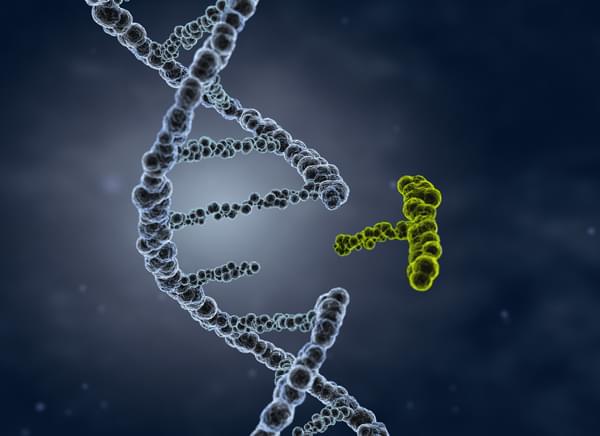
Increase the Speed Your Body Absorbs Vitamins
An emulsion is a liquid that contains tiny droplets of another liquid suspended inside of it.
A nanoemulsion is a liquid containing really tiny droplets of another… Up to a thousand times smaller.
But don’t be fooled by their small size…
Because that’s what gives them their incredible power.
Nanoemulsions increase the efficiency and speed your body absorbs vital nutrients and herbs[16]…
While maintaining stable for much longer periods of time (think years).
This means you get high precision relief and a longer-lasting effect.
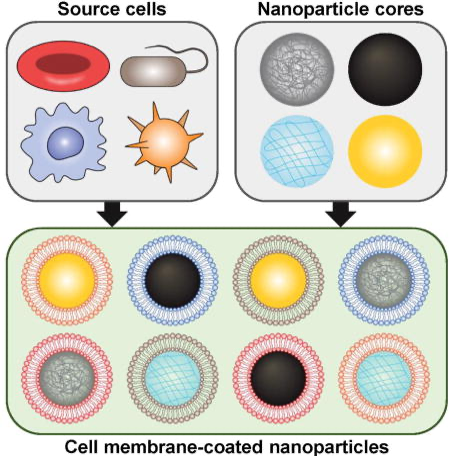
Nanoemulsions are able to coat your cells and remain stable for up to a year. They support cell integrity while delivering continuous targeted treatment.
It was this basic principle that led me to develop a new solution that’s:
- In vitro studies show it absorbs and disperses immensely faster.
- Takes less than a second to use — convenient easy to swallow capsule form.
-
Delivers a larger payload and more active ingredients — gel form maintains the perfect environment.
-
And… only needs to be used once a day — the power of the solution means there’s no need to keep dosing throughout the day.[17,18]
Biomimetics is a fancy way of saying, “copying nature.”
It’s been used to create materials 200x stronger than steel…
And it provides Japan’s Bullet Train with its world record speed.
Now, I’m using it to create a nanoemulsion formula based on your body’s own design…
One that supports and maintains your DNA to disrupt the aging process.
It’s based on something called a “telomere” (tee-lo-mere).
Telomeres are tiny caps that protect the end of your DNA much like the plastic tips on the end of your shoelaces help keep your laces from unraveling.
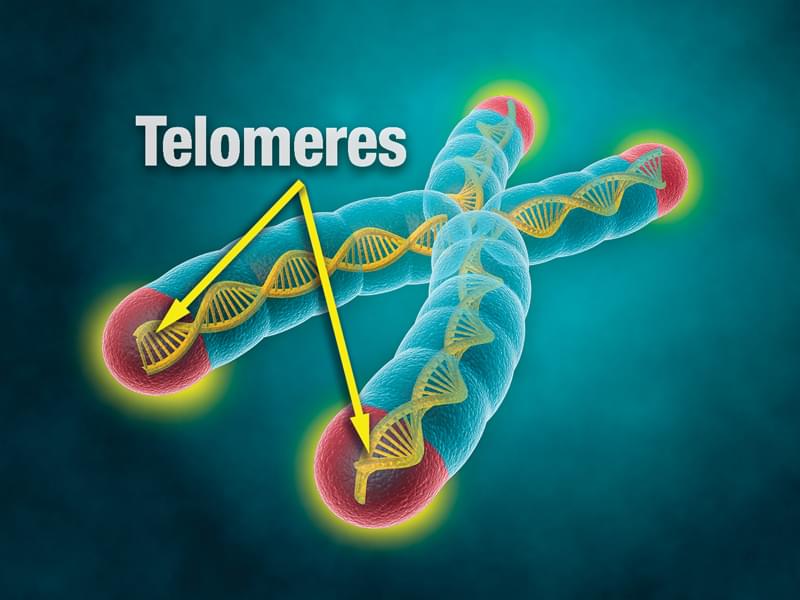
Every time your cells divide, your telomeres get shorter.
The shorter your telomeres get, the older your cells become.
This is why and how you age.
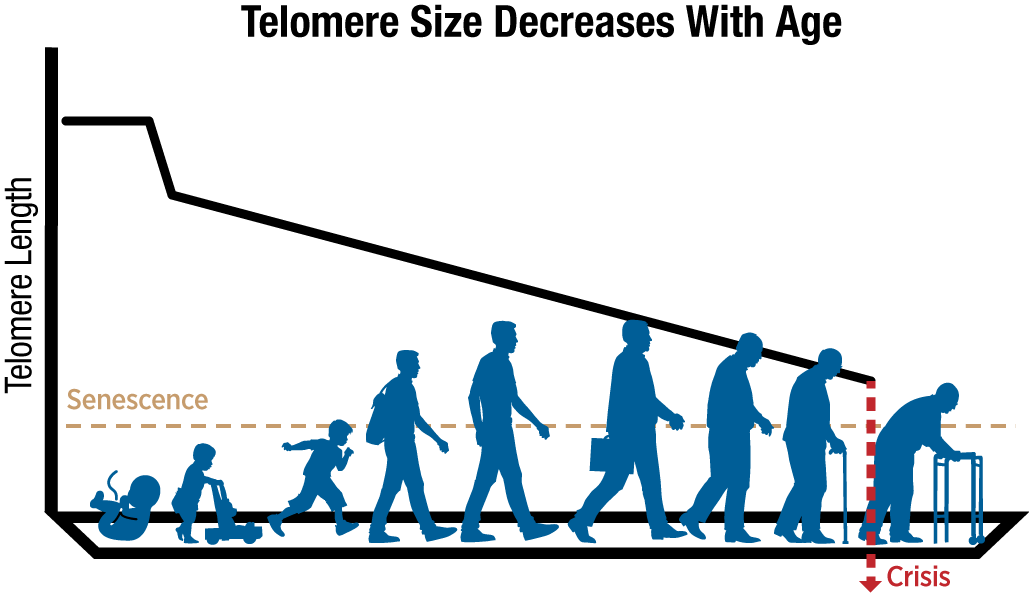
During the time spent in the womb, telomere length decreases abruptly and reaches a steady slow rate of erosion after birth. Telomere size continues to decline throughout your life until they reach a critical size and begin to die off.
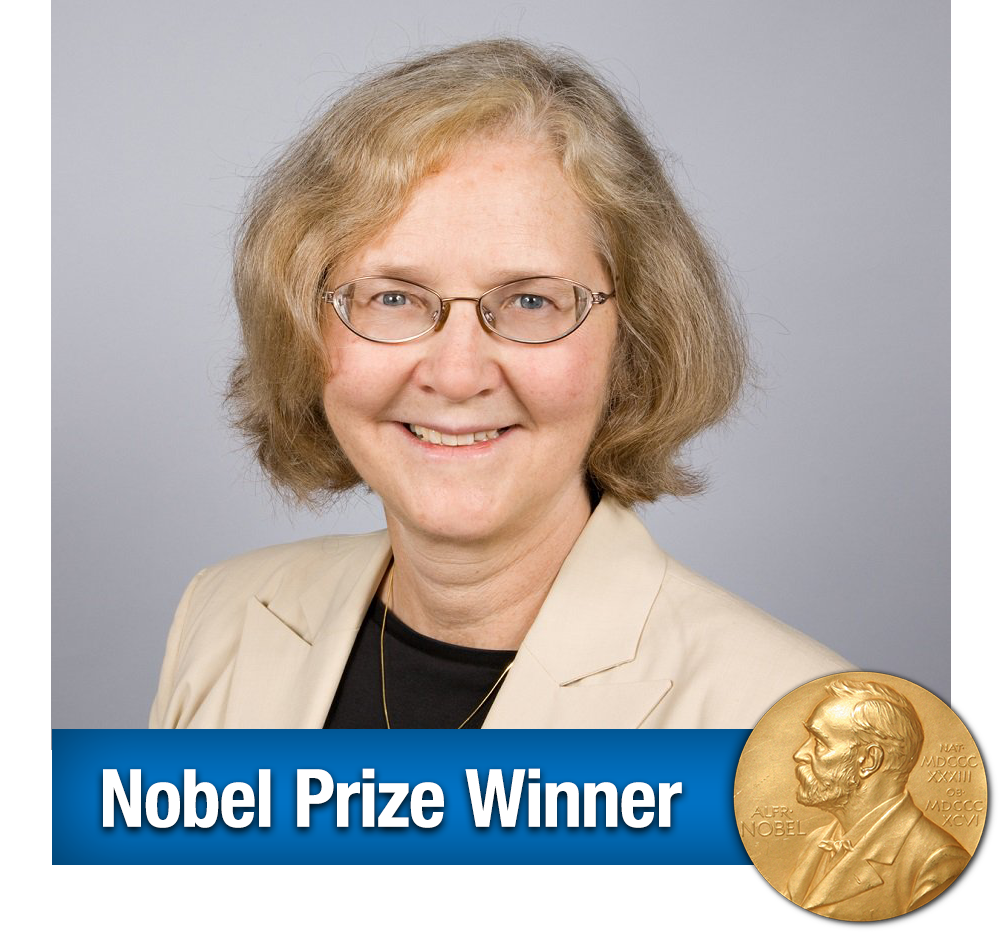
In 2009, a Nobel Prize-Winning Scientist discovered how to REBUILD telomeres and SLOW telomere shortening.
Dr. Elizabeth Blackburn of the University of California, San Francisco received the Nobel Prize in Medicine for her discovery of an enzyme called Telomerase.
Telomerase is the “fountain of youth” for your DNA.
It “rebuilds” your telomeres and keeps your cells youthful and strong.
In a randomized study there was evidence that longer telomeres translate to moister, firmer skin[21]…
And it supports increased strength, stamina[23,24,25] and endurance.
Managing your telomerase levels is the key to keeping your cells in a constant youthful state.
And now, I’ve found a way to do just that.
I used this Nobel Prize-winning discovery to develop a nanoemulsion formula that works on the tips of your DNA.
One that combines natural science with telomerase technology to harness your body’s latent youth.
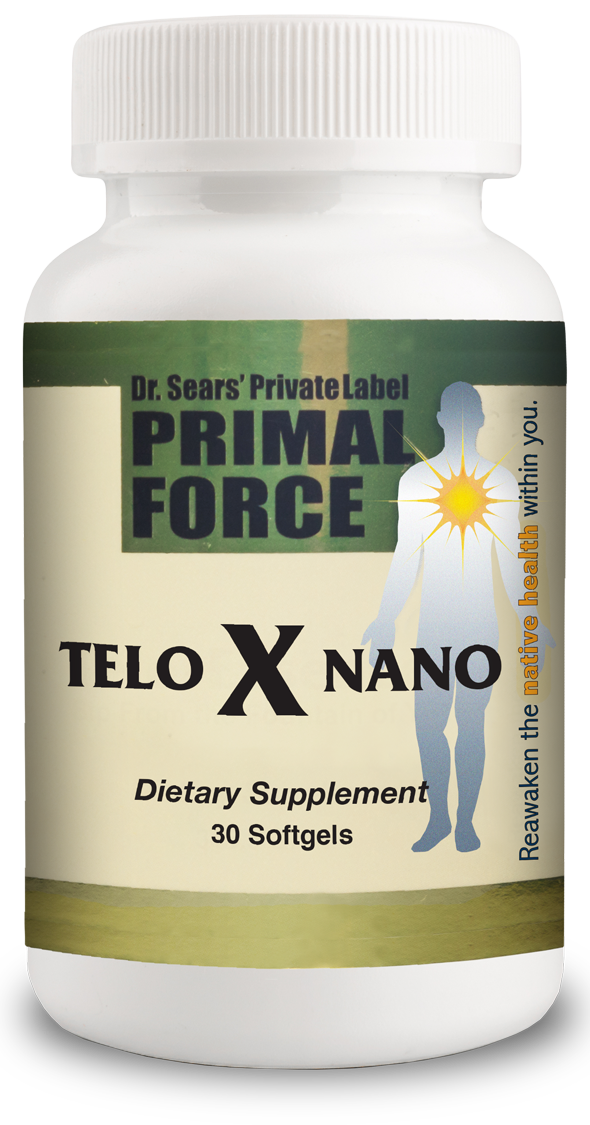
I call it Telo X Nano.
And it can…
Directly Influence the Way Your
Body Expresses Itself
Telo X Nano is the first and only clinically proven formula to use nanotechnology to directly interact with your body’s telomerase.
It uses natural enzymes and adaptogens on an unprecedented scale:
- In vitro studies show it absorbs and disperses immensely faster.
- Takes less than a second to use — convenient easy to swallow gel cap.
-
Delivers a larger payload and more active ingredients – the gel form maintains the perfect environment.
-
And… only needs to be used once a day — the power of the solution means there’s no need to keep dosing throughout the day.
This next generation technology has opened up an exciting new avenue of treatment for my patients…
And now I want to offer you the same benefits.
Ashwagandha and astragalus are two of top tier adaptogens.
Adaptogens are super flora that help the body deal with stress and restores balance.
Think of them as Mother Nature’s elite fighting force.
That’s why they were my first choice in my nanoemulsion formula.
According to the United States National Library of Medicine, ashwagandha and astragalus have been used for more than 3,000 years in Ayurveda…
… India’s native health care system.
Together, they deliver an incredible number of health benefits, including:
“Supporting healthy telomerase activity in human cells.”
– Advances in Bioscience and Biotechnology
“Supports a calm environment in tissue and healthy DNA replication.”
– Journal of Molecules
“Promoting desired cortisol (the stress hormone) levels.”
– Indian Journal of Psychological Medicine
“Supports feelings of well-being.”
– Indian Journal of Psychiatry
“Supporting healthy testosterone levels and fertility in men.”
– Journal of Evidence-Based Complementary and Alternative Medicine
“Maintaining muscle mass and strength.”
– Journal of Ayurveda and integrative Medicine
“Supporting healthy cholesterol and triglycerides within the normal ranges.”
– International Journal of Phytotherapy and Phytopharmacology
“Promoting improved brain function, including memory.”
– Journal of Molecular Neurobiology
But these two powerhouses of natural medicine don’t stop there…
They’re also essential for maintaining telomerase levels.
Results published in Advances in Bioscience and Biotechnology indicated just 10 mcg of Ashwagandha root bathed in a cell culture increased telomerase activity by an incredible 45%![27]
And in a separate study from the University of California, a component of astragalus root called TAT2 was shown to increase telomerase activity and slow telomere shortening.[29]
Clinical Trials Prove Ashwagandha and Astragalus Have the Power to Help You Grow “Biologically Younger” as You Age
Ashwagandha and astragalus are proven to help regulate telomere length and disrupt the aging process[32,33]…
But I want to ensure that your telomeres receive the right amount of daily DNA support…
…to keep them functioning at peak level.
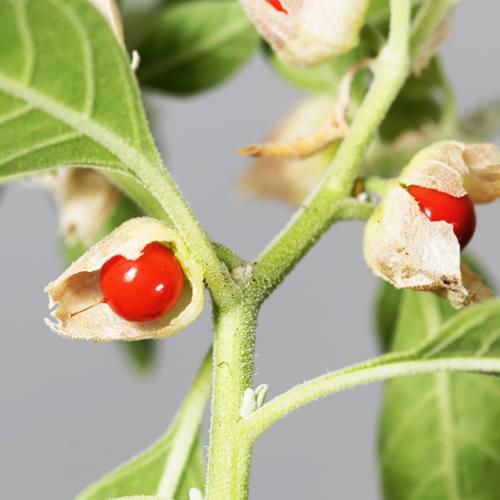
Ashwagandha

Astragalus
That’s why I combined the best natural enzymes available to create a special telomerase cocktail called an “hTERT complex.”
The hTERT complex is made up of some of the most powerful telomerase stimulators available, including:
These ingredients represent the cutting-edge of natural science…
And thanks to my Telo X Nano softgel, they can now be delivered direct to your DNA.
Telo X Nano is your daily solution to DNA maintenance.
And it’s the reason why my patients are living life just like they did in their 30s!
Forever Thirty DNA With
Complete Telomere Solution
Now there’s a natural solution that directly supports your cells’ youth engines…
With a next generation nanotechnology delivery system capable of directly targeting your DNA.
Never before has there been a treatment that can match its sheer power and precision…
- In vitro studies show it absorbs and disperses immensely faster.
- Takes less than a second to use
-
Delivers a larger payload and more active ingredients
-
And… only needs to be used once a day
No more medicine cabinets overflowing with pills…
One capsule gives you total control.
I tailored Telo X Nano to meet my patients’ needs and target their cells’ latent youth engines…
And now you can enjoy the same solution.
I want to give you the same chance at living younger by the day.
That’s why I’m dropping the price as low as I can…
…and even taking care of shipping costs…
Because I know this will be a real game changer for you.
…so your supply can last you even longer.
This is your personal “Best Deal” offer…
- Three bottles of Telo X Nano (a 3-month supply)
- With FREE shipping and handling (valued at $26.85)
-
And an additional 30% discount when you enroll in the VIP Auto Delivery Program.

And… if you change your mind, you can cancel at any time.
That’s not all though…
You’ll also receive 3 FREE Special e-Reports...
FREE e-Report No. 1
Ashwagandha: The Anti-Aging Miracle
Normally $19.95, it’s yours FREE when you order my “Best Deal” package.
In this valuable special e-Report, you’ll learn:
- The Nobel Prize-winning discovery that holds the key to reversing aging.
- How to trigger unhealthy cells’ “self-destruct button.”
- Medical shocker: Why the FDA is secretly trying to prevent you from accessing this wonder herb.

-
Why Africans call it the “the virility of a horse” and how it can stir men and women in the bedroom.
-
The missing link of modern medicine — Gone for 100 years and directly linked to the surge in illnesses.
-
And many more new secrets for beating the common cold, perfecting your blood sugar, and boosting yours and your partners’ sex drives, yours FREE!
FREE e-Report No. 2
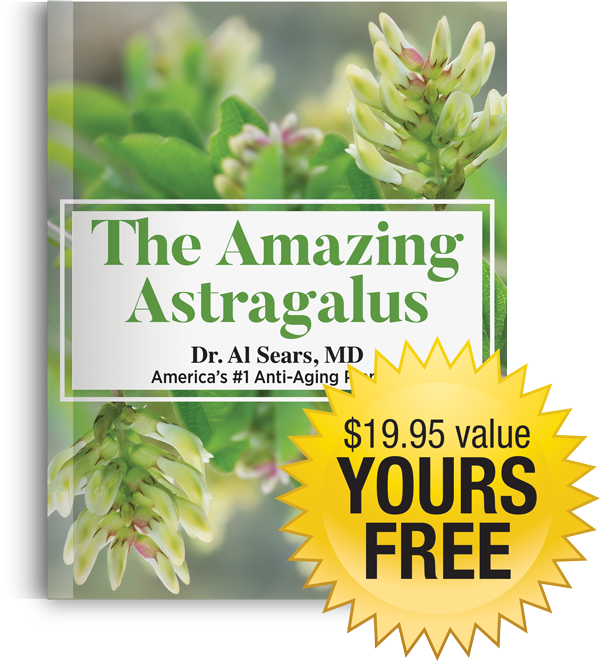
The Amazing Astragalus
Normally $19.95, it’s yours FREE when you order my “Best Deal” package.
In this valuable special e-Report, you’ll learn:
- How to make your body’s cells young again
- The 2,000-year-old Chinese remedy that defeats 4 biggest threats to your health
- How to get a $14,000 age-reversing treatment for just $60
-
Why learning to breathe the right way could make you immune to disease
-
The tea that helps with your chronic fatigue
-
And how to control blood sugar, protect your liver, defend against bacterial infection while lowering your stress, and much more, yours FREE!
FREE e-Report No. 3
hTERT
Normally $19.95, it’s yours FREE when you order my “Best Deal” package.
In this valuable special e-Report, you’ll learn:
- How to flick the “grow young switch” inside your body’s cells
- The “Sleeping Gene” that makes any chronic disease disappear
- The new discovery that could help you live to 200

-
An amazing new way to eradicate wrinkles and gray hair
-
How to rewrite your family medical history
- Why eating red meat turbocharges your brain and helps you think faster
-
And other safe and natural secrets for purifying your body and revitalizing your health
Plus, order within the next 24 hours and I’ll send you a special bonus e-Report…
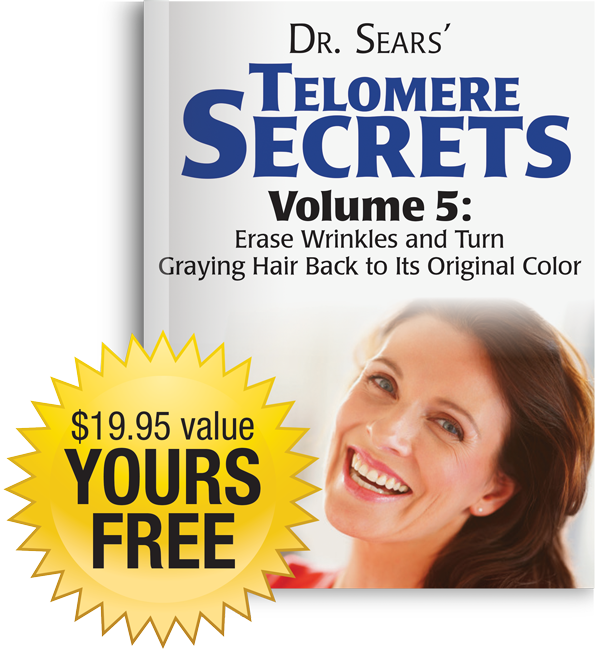
Telomere Secrets Volume 5: Erase Wrinkles and Turn Graying Hair Back to its Original Color
A $19.95, yours FREE!
In this valuable special e-Report, you’ll discover:
- The clinically proven “lifelong protection system” for your skin
- How Hollywood stars stop themselves from aging
- Shocking findings: Why sunscreens can make you age 5x faster!
-
The real cause of uneven skin tone
- A new way to get “snap-back” elasticity in your skin
- The super vitamin you need to take for fewer wrinkles and less dryness
-
How to extend the lifespan of your skin cells by up to 30%.
-
And other safe and natural secrets for purifying your body and supercharging your health
That’s a total of savings and FREE Gifts worth $166.60!
And as always, you have my 100% satisfaction guarantee — or you pay nothing.
Which means you can try Telo X Nano 100% Risk-Free!
I’m also running a Trial Offer for one bottle of Telo X Nano.
The Trial Offer includes the FREE special e-Report — hTERT: Youth Rebound.
Order one bottle of Telo X Nano for $59.95 plus $8.95 shipping and handling and get the special e-Report — hTERT: Youth Rebound.
Telo X Nano Is Support in a Bottle
So act now…
Start living life in your 30s again!
Just like my patients are doing:
The next generation nanotechnology in Telo X Nano has made a remarkable difference in my patients’ lives…
…giving them a new lease on life and complete peace of mind.
And now, you can enjoy the exact same benefits... without risk.
In fact, for any reason — or for no reason at all — if you do not want to continue taking Telo X Nano…
…just return the unused portion or even empty bottles within 90 days of purchase.
You’ll promptly receive a FREE REFUND of every penny paid.
…and whatever you decide, any bonus gifts are yours to keep.

“I have fantastic health and feel great.”
– Belinda M.

“My energy has come back from nowhere.”

“I feel fit, focused and happy.”
– Winter S.
They’re back in their prime and stronger than ever.
You have absolutely nothing to lose and only strength, youth and vitality to gain…
Order the new Telo X Nano today.
To Your Good Health,

Al Sears, MD, CNS
P.S. I urge you to hurry and order now. I expect once word gets out about this new nanotechnology, we’ll be slammed with orders — and I don’t want to run out. If so, that will mean ordering more, and you’ll likely have to wait weeks for your supply. So get your bottles of Telo X Nano now, while you can.
P.P.S. Don’t forget. Your “Best Deal” of Telo X Nano includes a 30% discount and the lowest price per bottle and greatest savings... plus three FREE Gifts, FREE Shipping and a Money-Back Guarantee.
So order today.
BEST DEAL!
Become a Telo X Nano VIP!
Buy three bottles of Telo X Nano for just $125.85.
- Plus get FREE shipping and handling.
-
Your immediate savings amount to $80.85.
- You’ll also get 3 FREE e-Reports valued at $19.95 each.
-
And, if you respond within the next 24 hours — you’ll get an EXTRA bonus e-Report valued at $19.95 as your free gift!
That’s $166.60 in FREE Gifts and Savings!

GREAT DEAL
Buy three bottles of Telo X Nano with a 15% discount for just $152.85.
TRIAL OFFER
Order one bottle of Telo X Nano for $59.95 plus $8.95 shipping and handling.
References:
These statements have not been evaluated by the U.S. Food and Drug Administration.
This product is not intended to diagnose, treat, cure or prevent any disease.